

A plain tee costs $8.77 to make on Printify before shipping, according to its own pricing page. Sell it for $25 and the gap, minus fees, is your business. That’s print on demand in one line.
This guide is for people who want to start a print on demand business selling their own designs on t-shirts, mugs and posters, without buying stock. It’s not for anyone expecting a hands-off income in month one.
We haven’t run a POD store for this post. The costs and fees below come from the Printify, Printful, Qikink, Etsy and Shopify pricing pages, checked on 11 November 2026.
Quick answer: To start a print on demand business, pick one narrow niche, make 10-20 designs, order samples, list them on Etsy or your own store connected to a POD printer, and price for at least 40% margin after fees.
- Start-up cost: close to zero for the platforms. Your real spend is samples, Etsy listing fees or a Shopify plan, and ads.
- Best for: people who can design (or brief a designer) and already know a community they want to sell to.
- Skip it if: you want fast money. Margins per item are small and most stores need months of testing.
- Our pick: Printify or Printful plus Etsy for a global audience; Qikink plus Shopify or WooCommerce for buyers in India.
What Is a Print on Demand Business, Really?
You upload a design, put it on a product in a printer’s catalogue and list it for sale. Nothing gets made until someone pays.
- A customer buys your design from your Etsy shop or online store.
- The order passes automatically to your POD printer.
- The printer charges you the base price plus shipping, prints the item and sends it to the customer under your shop name.
- You keep the difference between your selling price and everything you paid.
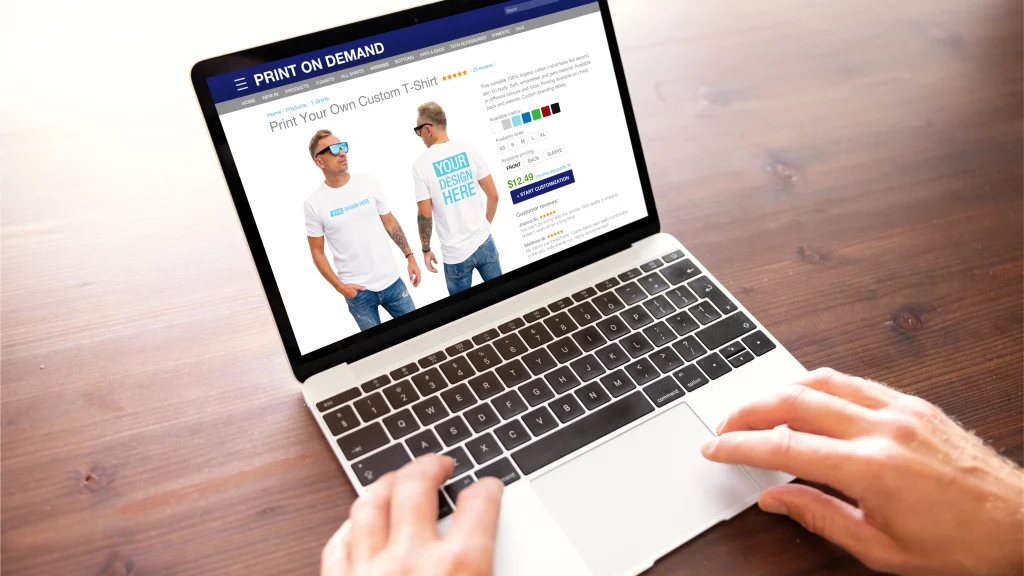
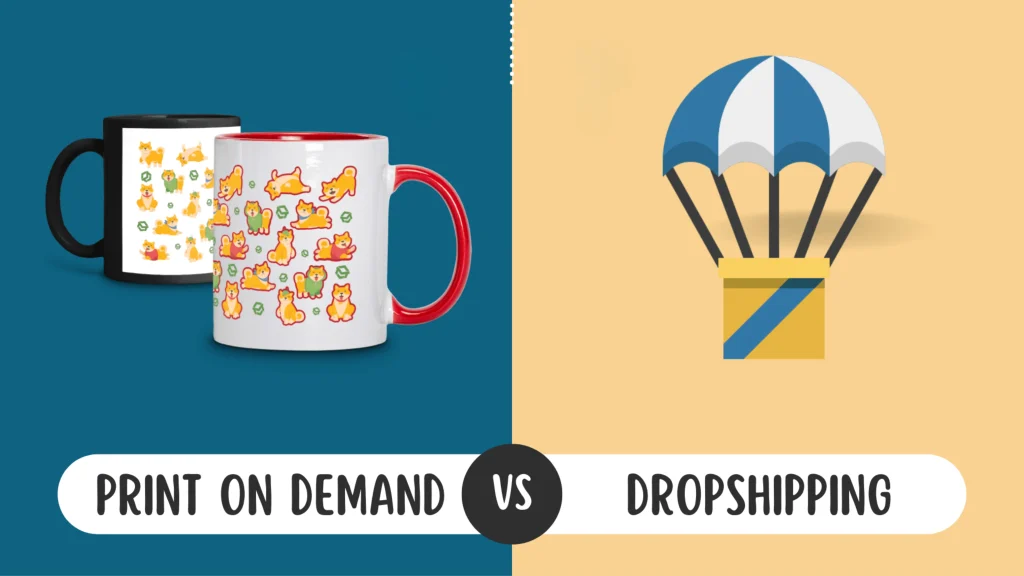
POD is close to dropshipping, with one big difference: you sell your own designs, not someone else’s generic product. That gives you a brand you can own. Our guide to starting a dropshipping business in India covers the reseller route.
And if shipping physical goods sounds like too much, selling digital products like printables and templates works on a similar idea with no printer at all.
How Much Does It Cost to Start Print on Demand?
Less than most people fear, more than “free” suggests. Here’s what each piece costs, from each company’s own pricing page:
| Service | What it does | Free option | Paid plan | Catch |
|---|---|---|---|---|
| Printify | POD printer network | Free plan, 5 stores | Premium from $39/mo, or $24.99/mo billed yearly | Premium only pays off once discounts beat the fee |
| Printful | In-house POD printing | Free plan | Growth $24.99/mo, free once you reach $12K/yr in sales | Branding extras cost more (inside label $0.99) |
| Qikink (India) | Indian POD printer, COD support | Free sign-up, no deposit | None; you pay per order | Print, shipping and COD charges added per order |
| Etsy | Marketplace with buyers | No monthly fee | $0.20 per listing + 6.5% per sale | Payment processing and set-up fees vary by country |
| Shopify | Your own store | 3-day trial, then $1/mo for 3 months | Basic $39/mo, or $29/mo billed yearly | 2% extra on Basic if you use a third-party payment gateway |
So the money really goes on three things. Samples, so you know what your customer will receive. Listing fees or a store plan. And marketing, which is where budgets quietly disappear.
Quick verdict: don’t pay for Printify Premium or Printful Growth on day one. Both make sense only once you’re selling enough that the product discount is bigger than the monthly fee.
How Much Can You Actually Make per Sale?
Here’s the maths most guides skip. Take Printify’s $8.77 tee and sell it on Etsy for $25, with the buyer paying shipping separately:
- Printify base cost: $8.77 (one print, before shipping)
- Etsy transaction fee: 6.5% of $25 = about $1.63 (Etsy also takes 6.5% of the shipping charge)
- Etsy listing fee: $0.20
- Left before payment processing: about $14.40
Now the catch. If the sale came through Etsy’s Offsite Ads, Etsy keeps another 15% of the order (12% once you pass $10,000 in a year), per its fee page. On a $25 order that’s $3.75.
That’s not a reason to avoid Etsy. It’s a reason to know your numbers per channel before you celebrate a sale.
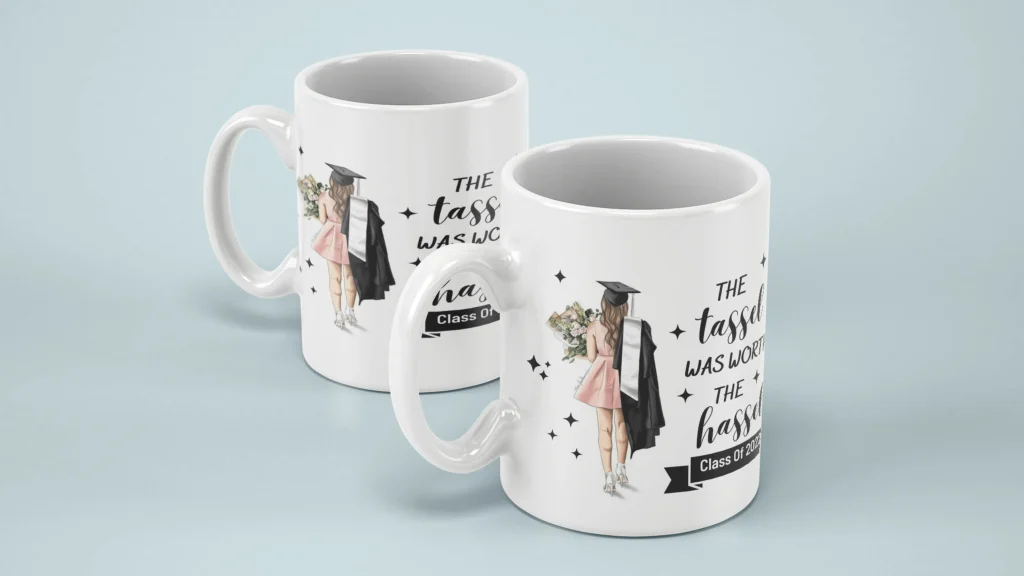
In India the numbers look different. Qikink’s own sample costing for its classic crew tee with an A4 DTF print adds up to ₹387: ₹190 product, ₹80 print, ₹54 shipping, ₹34 COD and ₹29 GST.
Sell that tee at ₹699 on your own store and you keep about ₹312 before payment gateway fees, your store plan, ads and returns. If you pay ₹150 in ads to win each sale, half of it is gone.
Our take: we couldn’t find trustworthy public data on what an average POD seller earns, so we won’t quote one.
Work out your own margin per item first. If it’s smaller than what you’d pay in ads to win one sale, ads will lose money. Simple, yet most new stores never check.
Which Print on Demand Platform Should You Use?
Pick the printer based on where your buyers live, not on whose YouTube ads you’ve seen most.
Printify: Cheapest Way to Test Products Globally
Printify is a marketplace of 70+ print providers, so you can pick a cheaper or faster printer for each product. The free plan covers five stores and unlimited designs, according to its pricing page.
If a manufacturing error slips through, Printify’s Merchant Protection covers a free reprint or refund within 30 days. The trade-off is quality that varies from one provider to the next, so order samples from the exact provider you’ll use.
Printful: More Consistent, Slightly Pricier
Printful prints in its own facilities, which usually means more consistent quality. Its pricing page says free-plan users get 20% off sample orders, limited to one sample order a month of up to three items.
Choose Printful if branding matters to you: custom labels, branded packaging and embroidery are all on the menu, at a price.
Qikink: Built for Selling Inside India
If your buyers are in India, you want a printer that prints and ships inside India. Qikink is based in Coimbatore, delivers to 29,000+ pincodes, supports cash on delivery and plugs into Shopify and WooCommerce.
Qikink says it charges no RTO (return-to-origin) fee on undelivered COD orders. That matters, because refused COD parcels are the hidden tax of Indian ecommerce.
Read its replacement rules too. Damaged items need a claim within 7 days, with an unboxing video.
What Happened to Teespring?
Spring, formerly Teespring, used to be on every list like this one. Not anymore. According to its shutdown notice, Spring stores and selling tools shut down on 28 October 2026, and products don’t move across to its replacement, Amaze Commerce.
If an older guide tells you to start on Teespring, close the tab.
How to Start a Print on Demand Business in 7 Steps
This is the order we’d follow with a small budget and evenings free.
Step 1: Pick a Niche You Can Design 30 Ideas For
“Funny t-shirts” isn’t a niche. “Gifts for Indian nurses” or “tees for marathon runners in Bengaluru” is. A good niche has a shared identity, inside jokes and people who buy gifts for each other.
Test demand before you design. Type niche phrases into Etsy and Amazon search, note the suggestions and check what’s already selling. The keyword research tools we compared for affiliate sites work for product keywords too.
Most beginners get this wrong by picking what they like rather than what a group of buyers already spends money on.
Step 2: Make Designs You’re Allowed to Sell
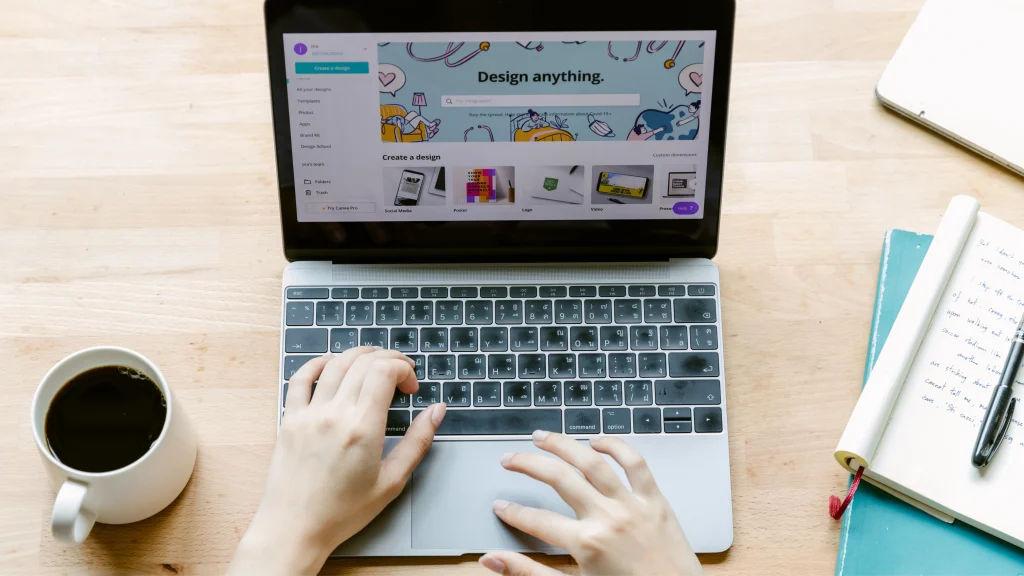
Text-based designs sell surprisingly well and are easy to make in Canva. If you’re already comfortable there, our guide to selling Canva templates shows a second way to use the same skill.
AI can speed up brainstorming and slogans; our post on making money using ChatGPT covers where it helps and where it gets you into trouble. Check each platform’s rules before listing AI-made art.
Warning: never use team names, film quotes, cartoon characters or brand logos. Marketplaces remove listings that break trademark or copyright rules, and repeat strikes can close your shop.
Step 3: Order Samples Before You List Anything
Order the product you plan to sell, from the printer you plan to use. Check the print colour, the fabric, the sizing and how it looks after one wash.
Samples also give you your own photos. Real photos of a real tee beat a mockup every time, and you’ll need them for social media anyway.
Step 4: Choose Where to Sell
You have two realistic starting points:
- Etsy: buyers are already searching, so it’s the fastest route to a first sale. You pay per listing and per sale, and you rent your customers from Etsy.
- Your own store: Shopify or WooCommerce plus a printer app. More control and better margins over time, but you must bring every visitor yourself.
Indian sellers targeting Indian buyers usually do better with their own store and Qikink, because COD matters. Our Shopify vs WooCommerce comparison helps you pick the store platform.
Step 5: Price for Profit, Not for Sales
Add up the base cost, shipping, marketplace or gateway fees, and a realistic ad cost per sale. Then price so at least 40% of the selling price is left.
If that number looks too high next to competitors, your niche is too crowded or your product is wrong. Don’t fix it by cutting your margin to nothing.
Step 6: Get Your First Visitors

Start where your niche already hangs out. Short videos of the product in use on Instagram Reels and Pinterest pins work well for visual products.
The posting habits in our guide to affiliate marketing on Instagram carry over to POD almost unchanged. For more channels, see these free traffic sources for small sites. Running your own WooCommerce store? Creators can sell your designs on commission too, and our WooCommerce affiliate plugin comparison covers the setup costs.
Real-world tip: hold off on paid ads until a design has sold a few times organically. Ads amplify a winner; they rarely rescue a dud.
Step 7: Handle Orders, Returns and Complaints
Your printer ships, but the customer complains to you. Write a returns policy that matches your printer’s rules, and reply to every message within a day.
Printers reprint for their own mistakes, not for a buyer who picked the wrong size. Qikink, for example, asks you to place a fresh order for size exchanges. A clear size chart on every listing saves you real money.
What Most Print on Demand Guides Get Wrong
They call it passive. It isn’t. Designs go stale, ad costs rise, printers change prices and marketplaces change fees. Expect to spend a few hours every week even once it’s working.
They also call it risk-free. You don’t risk unsold stock, sure. You do risk ad money, months of evenings and a shop suspension if a design crosses a trademark line.
And they rarely tell you when not to do it. If you can’t design and won’t pay a designer, or your niche can only stand ₹399 tees, pick another model.
Here are other legit ways to make $100 a day that might suit you better.
Mistakes That Sink New POD Stores
- Launching with 200 random designs. Twenty designs in one niche teach you more than 200 spread across ten.
- Skipping samples. One bad print review on Etsy costs more than the sample would have.
- Pricing from competitors, not costs. Many cheap listings are losing money; don’t copy them.
- Printing far from your buyers. A tee printed abroad and posted to India is slow and costly. Use a printer near your customers.
- Buying ads before proof. Wait for organic sales on a design before spending on it.
- Trademark shortcuts. Viral phrases and fan art get listings removed and shops closed.
Questions People Ask Before Starting Print on Demand
How Much Money Do I Need to Start a Print on Demand Business?
Printify, Printful and Qikink are free to join, so your real costs are samples, Etsy listing fees of 20 cents each or a Shopify plan at 29 to 39 dollars a month after the trial. Ads are optional at first and should wait until a design sells.
Can I Start a Print on Demand Business in India?
Yes. Indian printers like Qikink print and ship within India, support cash on delivery and connect to Shopify and WooCommerce. Indian sellers can also open an Etsy shop to reach buyers abroad, but Etsy charges a regulatory operating fee for sellers in India on top of normal fees.
Do I Need Design Skills for Print on Demand?
Not much. Simple text designs in Canva sell well in many niches, and you can hire freelance designers for artwork. What you do need is taste for your niche: knowing which jokes, phrases and styles your buyers will actually wear or gift.
Is Print on Demand Still Profitable?
It can be, but the margin per item is small. On a 25 dollar Etsy tee, fees and the base cost leave roughly 14 dollars before payment processing, and less if Offsite Ads apply. It works when designs sell organically and stops working when every sale needs paid ads.
Is Teespring Still a Good Option?
No. Spring, formerly Teespring, shut down its stores and selling tools on 28 October 2026, and its products don’t transfer automatically. Start on Printify, Printful or Qikink with Etsy, Shopify or WooCommerce instead, and check any older guide that still recommends Teespring.
So, Should You Start a Print on Demand Business?
Yes, if you can make designs for a specific group of people and you treat the first three months as paid research. It’s one of the cheapest ways to test whether people will buy your ideas.
For buyers abroad, start with Printify or Printful on Etsy. For buyers in India, start with Qikink on a Shopify or WooCommerce store, because COD wins sales.
One warning: don’t put money into ads until a design has sold without them.
Your next step: pick one niche, write down 30 design ideas, then open the Printify pricing page or Qikink tee costing and price your first product before you design a thing.

[…] you’d rather sell your own designs than promote other people’s products, here’s how to start a print on demand business without buying […]
[…] you’d rather sell your own designs than resell existing products, look at how a print on demand business works. The order flow is similar, but every product is printed after the […]