


Amazon India won’t even review your Associates application until you’ve referred three sales within 180 days. That one rule says a lot about affiliate marketing for beginners: nobody pays you for having a link. They pay you for sending buyers.
This guide is for people starting from zero, with a phone, a laptop and a few hours a week. It’s not for anyone hoping to earn ₹1 lakh next month from a WhatsApp group. If your budget is basically zero, read how to start affiliate marketing with no money for free platforms and honest limits.
We built it from the programs’ own rulebooks: Amazon.in’s current fee schedule and operating agreement, ASCI’s disclosure rules and Google’s spam policies, all checked on 5 November 2026. No screenshots of someone else’s earnings, no guru maths.
Quick answer: Affiliate marketing means you recommend a product with a tracked link and earn a commission when someone buys.
As a beginner, pick one niche, one platform and one or two programs, then publish content that helps people decide what to buy.
Expect months, not weeks, before the first payout.
- Best for: people who like explaining things and can stick with one topic for 6-12 months.
- Skip it if: you need guaranteed income this month. Commissions arrive late and unevenly.
- Our take: start with Amazon.in plus one higher-paying software or hosting program, not ten programs at once.
What Is Affiliate Marketing, in Plain English?
A brand gives you a special link. You put that link in a blog post, video description or Instagram bio. If someone clicks it and buys, the brand pays you a cut. That’s the whole model.
The cut depends on the program and the product. On Amazon.in, the rate is set per category and changes every few months, so check the table before you plan content around it.
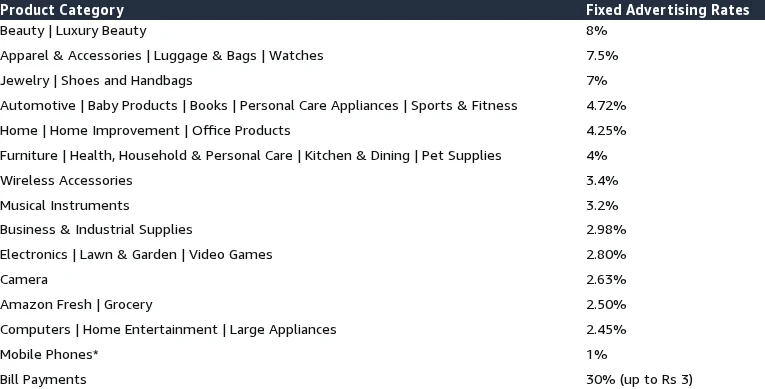
Here’s what those percentages look like on real order sizes. These are Amazon.in’s published category rates applied to round numbers, not our earnings:
| What the reader buys | Order value | Amazon.in rate | Your commission |
|---|---|---|---|
| Pair of running shoes | ₹3,000 | 7% (shoes) | ₹210 |
| Mixer grinder | ₹4,000 | 4% (kitchen) | ₹160 |
| Paperback book | ₹400 | 4.72% (books) | about ₹19 |
| Budget smartphone | ₹15,000 | 1% (mobile phones) | ₹150 |
| Mobile recharge | ₹299 | 30%, capped at ₹3 | ₹3 |
Notice the recharge row. Thirty percent sounds amazing until you see the ₹3 cap, which is roughly the price of a cutting chai’s sugar.
In plain English: the percentage matters less than what the reader actually buys. If you want the Amazon side in detail, our beginner walkthrough of Amazon Associates covers sign-up, link building and approval.
How Much Can a Beginner Actually Earn?
Honestly, there’s no trustworthy “average beginner income” figure. Most numbers you’ll see online are screenshots from people selling courses, and nobody audits them.
So do the maths yourself instead. Say you want ₹10,000 a month from Amazon kitchen products at 4%, with an average order of ₹2,500. Each sale earns ₹100, so you need 100 sales a month.
If roughly 1 in 50 people who click actually buy (an assumption for this example, not a benchmark), that’s 5,000 clicks to Amazon every month. And only a slice of your readers will click at all.
Warning: anyone promising a fixed income from affiliate marketing in your first 90 days is selling you something. Commissions depend on traffic you don’t have yet.
The good news: higher-ticket and recurring programs change that maths fast. Many software and hosting programs pay a flat fee or a monthly cut per customer.
Our list of affiliate programs for digital marketers has the current, checked terms for those.
Affiliate Marketing for Beginners: The 6-Step Plan
This is the order we’d follow if we were starting again today. Each step has one common mistake, because that’s usually where beginners lose three months.
Step 1: Pick a Niche Where People Already Buy
Choose a topic you can write or film 50 pieces about, where readers spend real money. Home office gear, running, budget skincare, blogging tools. “Lifestyle” is not a niche; it’s a mood.
Common mistake: picking a niche only because the commission is high. If you’re bored by post 8, the commission rate won’t save you.
Step 2: Choose One Platform and Commit
A blog gives you search traffic that compounds; it’s slower to start but you own it. If writing is your thing, here’s how to set up a blog with costs and first posts.
Video suits people who explain better out loud; see how affiliate links work on YouTube. Instagram works for visual products, and our guide to affiliate marketing on Instagram covers what’s allowed.
Common mistake: posting the same thin content on four platforms. Get good on one first.
Step 3: Join One or Two Programs, Not Ten
Start with a program that matches your niche and accepts new creators. Amazon.in lets you start linking right after you apply.
But its application review page says it checks your site only after three qualifying sales in the first 180 days. Personal orders don’t count.
Common mistake: applying to every program you find. Amazon.in withdraws applications that miss the three-sales window, and juggling dashboards eats writing time.
Step 4: Create Content That Helps Someone Decide
People click affiliate links when they’re close to buying. So write the content they read at that moment: “best X under ₹2,000”, “X vs Y”, “is X worth it”, honest reviews with real downsides.
Google is clear about the opposite approach. Its spam policies call out “thin affiliation”: pages that copy merchant descriptions without adding value. Its guidance on reviews asks for evidence of first-hand experience.
Before you write, check what people actually search for. Our comparison of SEO tools for affiliate sites includes free options.
Step 5: Disclose Every Affiliate Link Clearly
In India, ASCI’s influencer guidelines list “Affiliate” as an accepted disclosure label and say it must be upfront and prominent. Not hidden in a bio, not buried in a pile of hashtags, not behind “more”.
Common mistake: thinking disclosure hurts clicks. A clear label costs you almost nothing; a complaint or a banned account costs you everything.
Step 6: Track Clicks, Then Double Down on What Sells
After 20-30 posts, look at which pages get clicks and which clicks turn into orders. Write more of what works and update the rest. Link shorteners and affiliate tracking tools make this far easier than guessing.
Real-world tip: keep a simple sheet with each post, its main affiliate link and monthly clicks. After three months, the pattern is usually obvious, and it’s rarely the post you expected.
Which Affiliate Programs Should Beginners Join First?
There’s no single best program. There’s a best first pair for your niche. Here’s how the main types compare:
| Program type | Example | How you’re paid | Good first pick if |
|---|---|---|---|
| Marketplace | Amazon.in Associates | Category % of the order (mostly 0-8% in the Oct-Nov 2026 table), paid about 60 days after month end, ₹1,000 minimum by bank transfer | You review physical products |
| Software / SaaS | Email, SEO and design tools | Flat fee or recurring % set by each brand | You write about tools for creators or small businesses |
| Web hosting | Hostinger referral program | 20% of an eligible first purchase; the buyer also gets 20% off | You teach people to start websites |
| CPA offers | Sign-ups, app installs, leads | Fixed amount per action | You already have traffic from ads or a big audience |
Hosting and software programs usually pay far more per sale than marketplaces. Our list of hosting affiliate programs compares them. CPA is a different game with its own risks; read how CPA offers work before touching it.
Quick verdict: Amazon.in is a fine first program and a bad only program. Pair it with one software or hosting program that fits your niche.
What Most Beginner Guides Get Wrong
They sell affiliate marketing as passive. It isn’t, at least for the first year. You’ll write, film, update and fix broken links long before anything runs on its own.
They also treat traffic as an afterthought. The hard part isn’t joining a program, it’s getting 1,000 of the right people to your page. Spend 80% of your energy there.
Search is one route; there are others. Our guide to free traffic sources for affiliates covers forums, Pinterest, communities and more.
And here’s the contrarian bit: you don’t need a website to start. You do need one to build something you own. Social accounts get suspended, algorithms change, and an affiliate business on rented land is fragile.
Mistakes That Get Beginners Rejected or Banned
- Buying through your own links. Amazon.in says personal orders don’t count toward the three qualifying sales, and gaming it risks the account.
- Spamming links in groups and comments. It burns your reputation faster than it earns.
- Copying product descriptions. That’s the “thin affiliation” Google’s spam policies describe.
- Hiding the disclosure. ASCI wants it upfront, not in a bio or after “more”.
- Quitting at month three. Search traffic often takes months to arrive. Most people stop right before it does.
How Long Until Your First Commission Arrives?
Two clocks run at once. First, Amazon.in gives new applicants 180 days to land three qualifying sales.
Second, its operating agreement says it pays about 60 days after the end of each month, once you’ve earned at least ₹1,000 for bank (NEFT) transfers.
So a sale in December is typically paid around the end of February, and only once your balance clears ₹1,000. Plan for a gap of several months between your first post and your first payout. Our look at affiliate marketing profitability in India, with real numbers runs the same maths across categories and programs.
A cookie detail matters too: an Amazon.in session ends 24 hours after the click, though items added to the cart in that window still count if ordered within 89 days.
Questions Beginners Ask About Affiliate Marketing
Can I Do Affiliate Marketing for Beginners With No Money?
Yes. Joining programs like Amazon.in Associates is free, and you can start on a free social account. A blog costs a little for hosting and a domain, but it’s optional at the start. Your real investment is time: months of consistent content before payouts arrive.
Do I Need a Website to Start Affiliate Marketing?
No. Amazon.in accepts public Facebook pages, Instagram, YouTube and a few other social profiles, usually with an established audience. A website is still worth building later, because you own it and search traffic keeps arriving without new posts every day.
How Many Affiliate Programs Should a Beginner Join?
One or two. Pick one program that fits your niche, such as Amazon.in for physical products, and one higher-paying software or hosting program. Add more only when your content regularly sends clicks and you can see what your audience buys.
Is Affiliate Marketing Legal in India?
Yes, it’s a normal advertising arrangement. You must disclose affiliate links clearly, as ASCI’s influencer guidelines require, and declare the income for tax. Amazon.in’s agreement also expects GST-compliant invoicing where GST applies to you, so speak to a tax adviser once earnings grow.
How Long Does It Take to Earn the First Commission?
Usually a few months. Content needs time to get traffic, and Amazon.in pays about 60 days after the end of the month in which the sale happened, once you cross ₹1,000. Treat the first six months as building time, not earning time.
So, Where Should You Start This Week?
Pick one niche you won’t get bored of, one platform you’ll actually show up on and one program that matches what your readers buy. Then publish ten genuinely useful pieces before you judge anything.
Our pick for most beginners: a small blog or YouTube channel, Amazon.in for product links and one software or hosting program for bigger commissions. For program-by-program terms in rupees, see our best affiliate programs for beginners in India.
One warning: ignore anyone selling a shortcut. The people earning well from affiliate links mostly did the slow part properly.
Your next step: open the Amazon.in fee schedule, find your niche’s category rate and write down your first five post ideas around products in that category.



[…] yet, start with the audience; no commission rate fixes zero clicks. Brand new to all of it? Our step-by-step plan for affiliate marketing beginners covers niche, platform and first […]
[…] offers a straightforward way to start earning money online. Before you commit to Amazon alone, our affiliate marketing for beginners guide shows how it compares with software and hosting […]
[…] recommend things people already want. You can do this through a blog, YouTube, or social media. Our 6-step affiliate marketing plan for beginners walks through choosing a niche, a platform and your first […]
[…] to earn from the site? Our guide to affiliate marketing for beginners explains how to pick a niche and your first programs before you spend on hosting. Most people start […]
[…] you want the full six-step plan that assumes a small budget for a blog, use our affiliate marketing for beginners hub. This page stays on methods that cost ₹0 to […]
[…] you’d rather skip customer service, stock and returns completely, our step-by-step affiliate marketing plan for beginners shows a lighter way to earn from products you don’t sell […]
[…] choosing a niche or platform? Our step-by-step plan for affiliate marketing beginners starts there. If you can’t spend anything yet, read how to start affiliate marketing with no […]